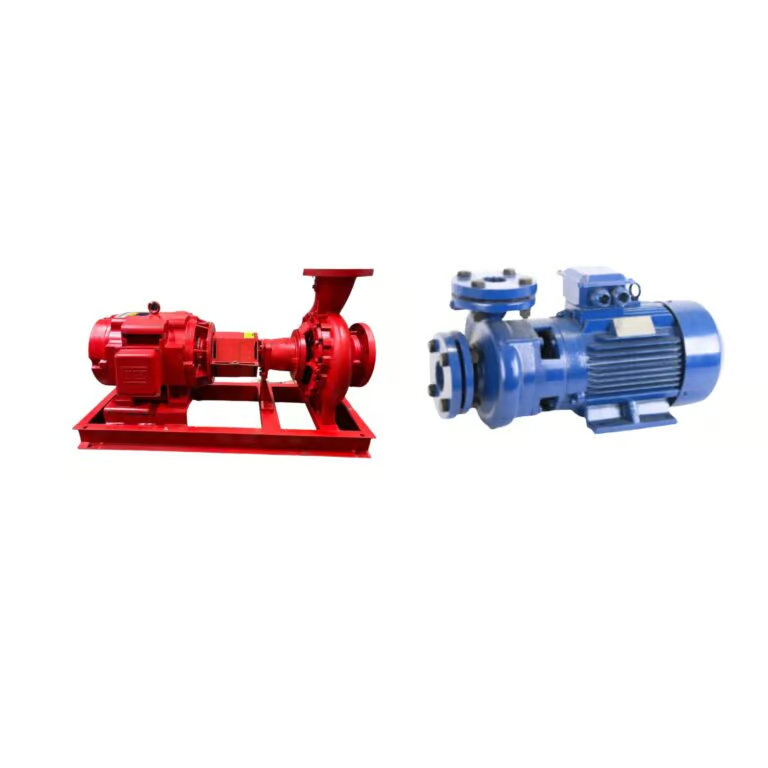
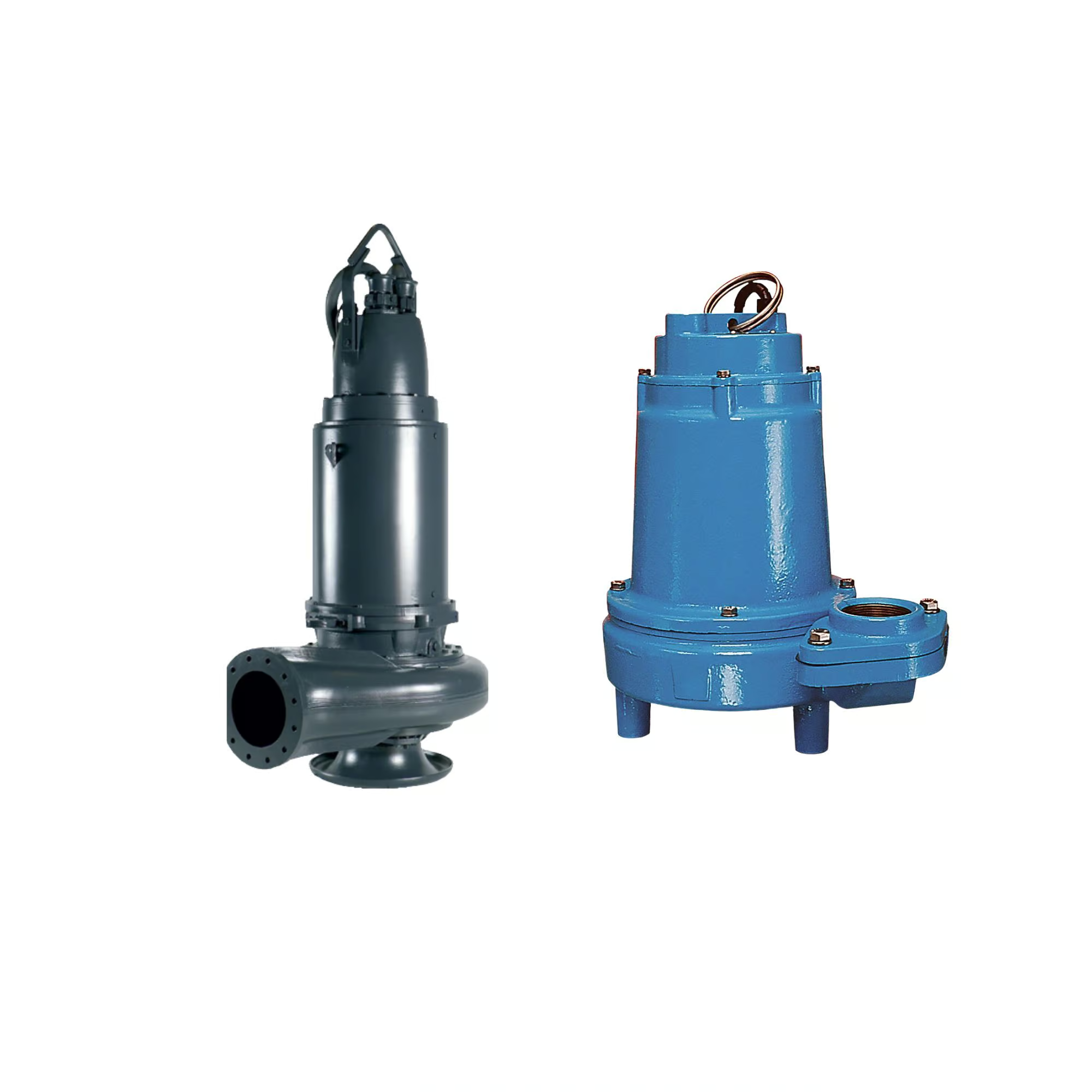
Submersible pump failure at a municipal wastewater lift station
Industry: Water / Wastewater, Municipalities Pump Type: Submersible Pump Services Performed: Emergency teardown and inspection, motor reconditioning, seal replacement, impeller resurfacing, corrosion treatment
The Situation: A Race against the weather conditions
A municipal wastewater lift station experienced a sudden, sharp drop in pumping capacity on one of its two submersible pumps, just as the forecast was calling for a stretch of heavy rain. With one pump down, the station was relying entirely on a single unit to manage incoming flow — a precarious position for any wastewater facility, where the cost of a failure isn’t measured only in dollars, but in the risk of a sewer backup, overflow, or environmental compliance issue.
For municipalities, the financial impact of a pump failure goes beyond the repair invoice. There’s the cost of emergency callouts and overtime operations staff monitoring the situation around the clock, the risk of regulatory penalties tied to overflow events, and the reputational cost of a public-facing infrastructure failure. The clock was ticking, and the municipality needed answers fast: was this a quick fix, or did they need to look at emergency rental or replacement equipment?
Identifying the problem
The pump was pulled out and brought in the shop for inspection, with the team prioritizing this job given the weather timeline. On disassembly, the cause became clear fairly quickly:
- Moisture intrusion into the motor housing, traced back to a failed shaft seal that had allowed water to migrate past the seal barrier and into the motor compartment over time.
- Corrosion on several internal components, a common finding in submersible units that spend extended periods fully submerged in wastewater, particularly around fastener points and the lower seal housing.
- Impeller wear from solids and debris, which is a near-universal issue in wastewater applications, where rags, grit, and other debris pass through the pump regularly and gradually erode the impeller surface and clearances.
None of these issues, individually, were unusual for a submersible pump that had been in continuous wastewater service. But together, the seal failure had effectively opened the door for the corrosion and motor moisture problems that followed, and it was clear the unit needed a full reconditioning rather than a single-part swap.
Solution
Given the urgency, we moved straight from inspection into reconditioning once the municipality gave the go-ahead over the phone, with a written report following immediately after. The motor was dried out, tested, and reconditioned, with affected windings inspected closely for any insulation of damage from the moisture intrusion. The failed shaft seal was replaced with a more robust dual-seal design better suited to continuous submersion, which provides a secondary barrier against the kind of single-point failure that caused this issue in the first place. The impeller was resurfaced to restore proper clearances and hydraulic performance, and the corroded fasteners and housing components were treated and, where necessary, replaced with corrosion-resistant hardware.
For wastewater applications like this, we typically lean toward OEM parts for core components like seals and impellers, since the consequences of premature failure are higher than in many other industries — but for fasteners, housings, and other non-critical hardware, quality aftermarket parts can offer a faster turnaround without compromising reliability, and we’ll flag that option to the customer where it makes sense.
Turnaround Under Pressure
This is exactly the kind of situation were having an established relationship with a repair provider, rather than scrambling to find one mid-crisis, makes the biggest difference. We were able to fast-track this job ahead of less urgent work in the shop, complete the inspection same day, and turn the full reconditioning around quickly enough that the pump was back in the lift station and tested before the rain event arrived. The municipality avoided having to source an emergency rental pump, which would have added both cost and lead-time risk on top of an already tight schedule.
Preventing It from happening again
The original seal failure was the root issue, so our recommendation centered on prevention at that point. We suggested the municipality move to a regular seal inspection interval rather than a run-to-failure approach, particularly given how much more expensive and riskier a wastewater pump failure is compared to other applications. We also recommended the upgraded dual-seal design be applied to the station’s second pump proactively, rather than waiting for a matching failure, since both units see the same duty cycle and environment. Lastly, we flagged the corrosion pattern we found as something worth monitoring across the station’s other submersible equipment, since it often points to a broader water chemistry or grounding issue rather than a one-off problem with a single unit.
Result
The lift station regained full pumping redundancy ahead of the storm, the municipality avoided both an environmental compliance risk and the cost of emergency rental equipment, and the second pump is now on a proactive seal-upgrade schedule to prevent a repeat failure before it happens.