Diaphragm pump selection and repair for a specialty chemical manufacturer
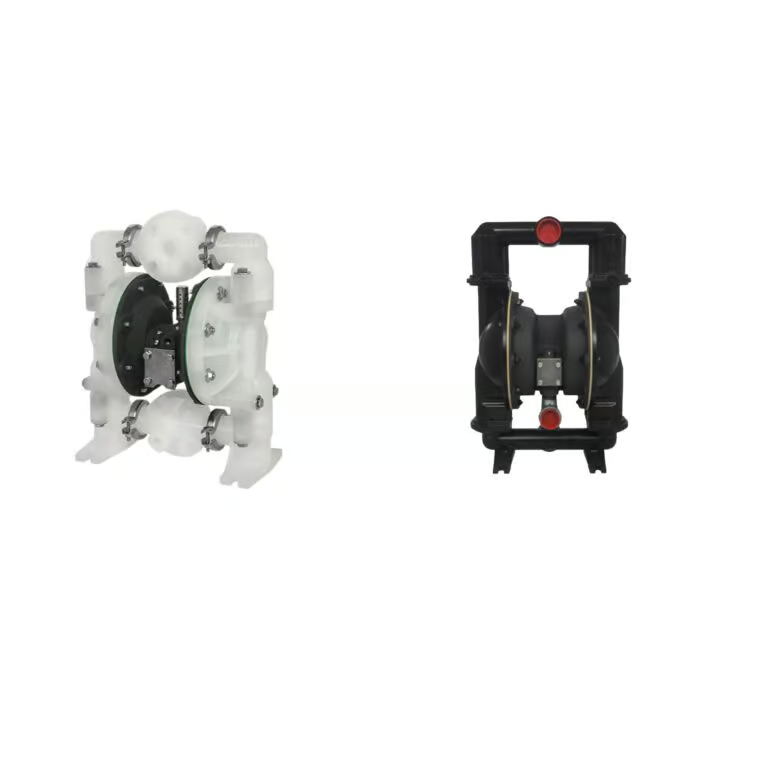
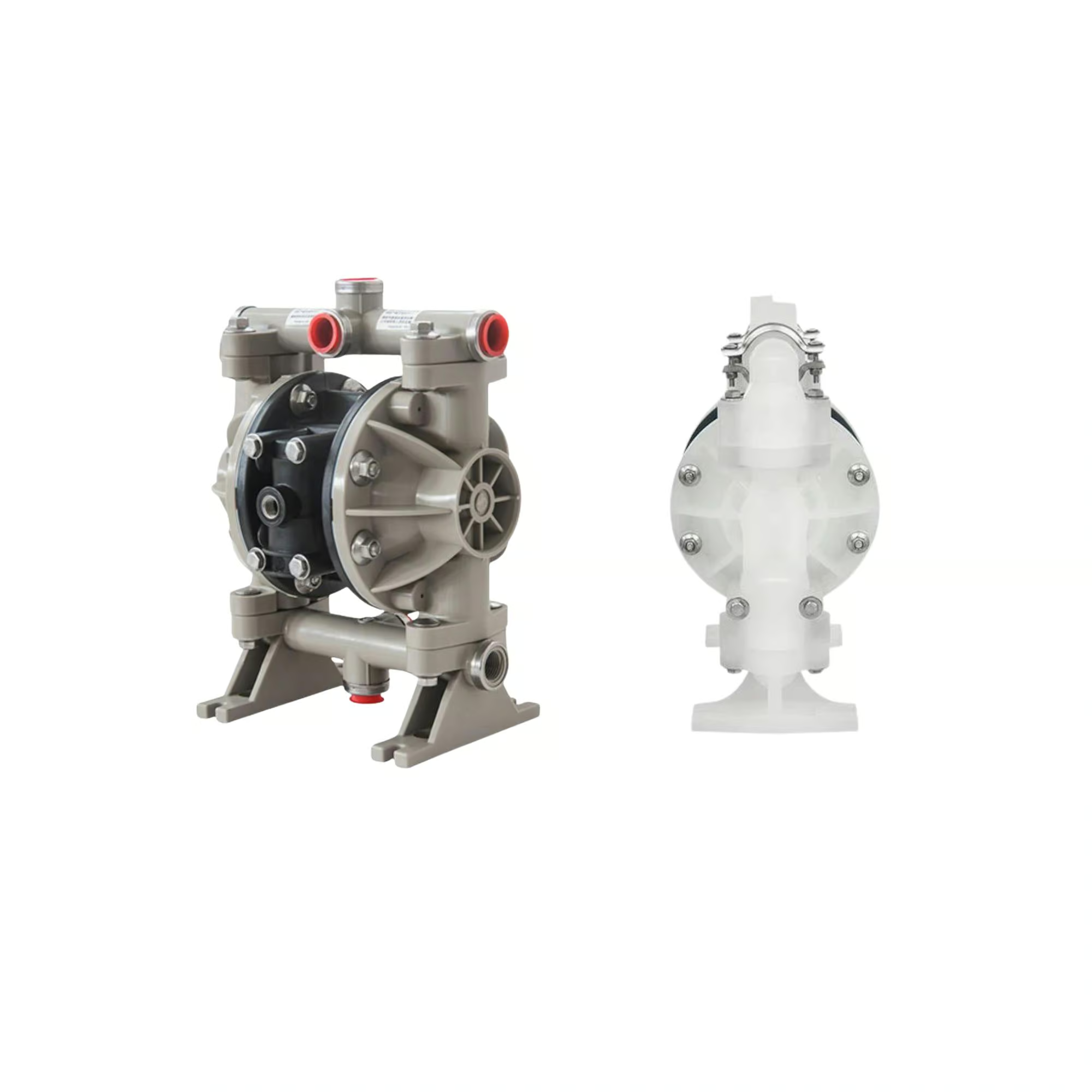
Industry: Chemical Processing / Specialty Manufacturing Pump Type: Air-Operated Diaphragm Pump Services Performed: Failure analysis, diaphragm material upgrade, wetted parts replacement, compatibility consultation
The Situation: A Pump parts in wrong application
A specialty chemical manufacturer was experiencing unusually short service life on a diaphragm pump used to transfer an aggressive solvent-based product — the diaphragm was failing every few months, well below the typical service life expected for that type of pump, resulting in repeated unplanned downtime, repair costs, and the cleanup and product loss that comes with each diaphragm failure in a pump handling solvent-based material.
Each failure meant pulling the line down, dealing with the safety procedures around a solvent spill cleanup, and losing production time while a replacement diaphragm was sourced. The plant had been replacing the diaphragm with a like-for-like part each time, assuming it was simply a normal wear item that needed frequent replacement — but the frequency was well outside what should be expected.
Identifying the problem
Rather than just supplying another replacement diaphragm, the inspection focused on understanding why failures were happening so often. The investigation found that the diaphragm material originally specified for the pump was not well matched to the chemical compatibility profile of the specific solvent-based product being handled — a mismatch that was causing accelerated material degradation well ahead of the diaphragm’s normal expected service life. The wetted parts and check valves were also showing wear consistent with chemical attack rather than simple mechanical fatigue, reinforcing the material compatibility diagnosis.
Solution
The pump was rebuilt with an upgraded diaphragm material specifically selected for compatibility with the solvent-based product, along with matched wetted parts and check valve components rated for the same chemical exposure. This is a recommendation we make at no additional engineering cost whenever an inspection points to a material compatibility issue rather than ordinary wear — getting the material specification right the first time is almost always more cost-effective for the customer than continuing to replace a mismatched part on a recurring basis.
Turnaround Time
Because this was a known recurring issue rather than a sudden emergency, the plant had some flexibility on timing, but we still completed the diagnosis and sourced the upgraded diaphragm material promptly so the plant could plan the changeover during a scheduled maintenance window rather than another unplanned outage.
Preventive action
The material upgrade was, in effect, the prevention measure here. We also recommended the plant review diaphragm material specifications on its other pumps handling similar or related chemical products, since the same compatibility mismatch is often present on more than one pump if it was part of the original equipment specification rather than something introduced later.
Result
The pump’s service life on the diaphragm increased substantially after the material upgrade. Well beyond the few months the plant had been experiencing, reducing both direct repair costs and the production downtime and cleanup associated with each failure. The case highlights a common and often overlooked cause of “frequent” diaphragm pump failures: not a defective part, but a diaphragm material that was never correctly matched to the chemical being handled in the first place.
Vacuum and Diaphragm Pump Repair is where we specialize
Vacuum and diaphragm pumps show up across an unusually wide range of industries — from CNC woodworking and commercial printing to food packaging and chemical dosing — and each application puts very different demands on the equipment. A vacuum pump holding down a CNC panel has little in common, mechanically, with one supporting a MAP packaging line, and a diaphragm pump dosing treatment chemical has different failure modes than one transferring a viscous food product. Getting these repairs right consistently requires both broad brand experience and application-specific knowledge of how each pump type fails and why.
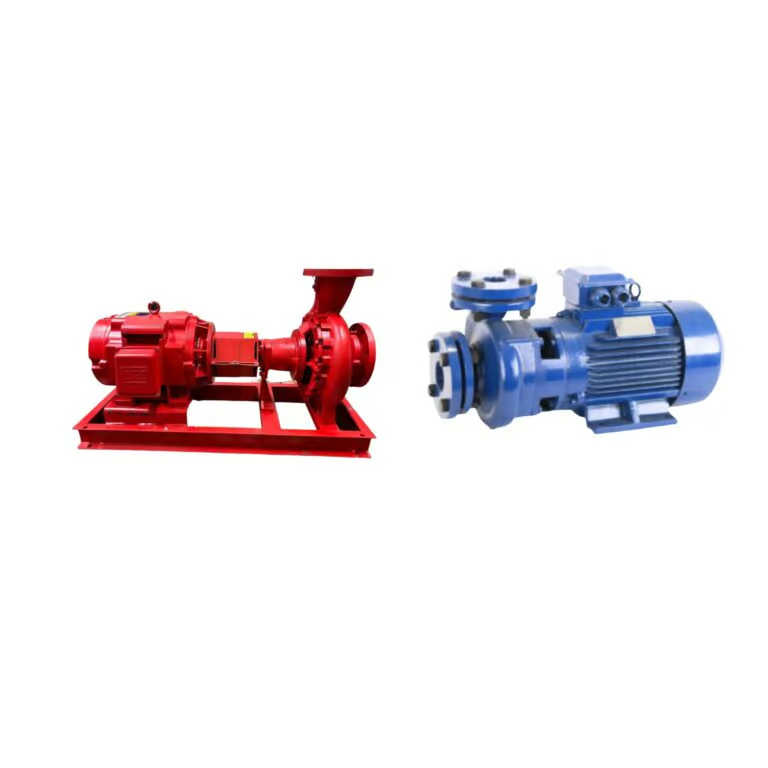
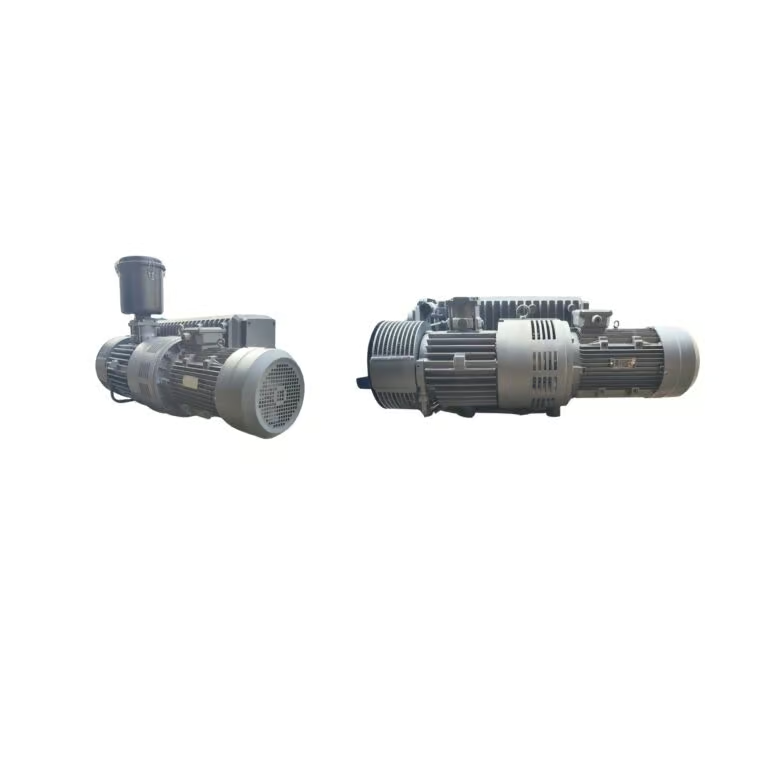
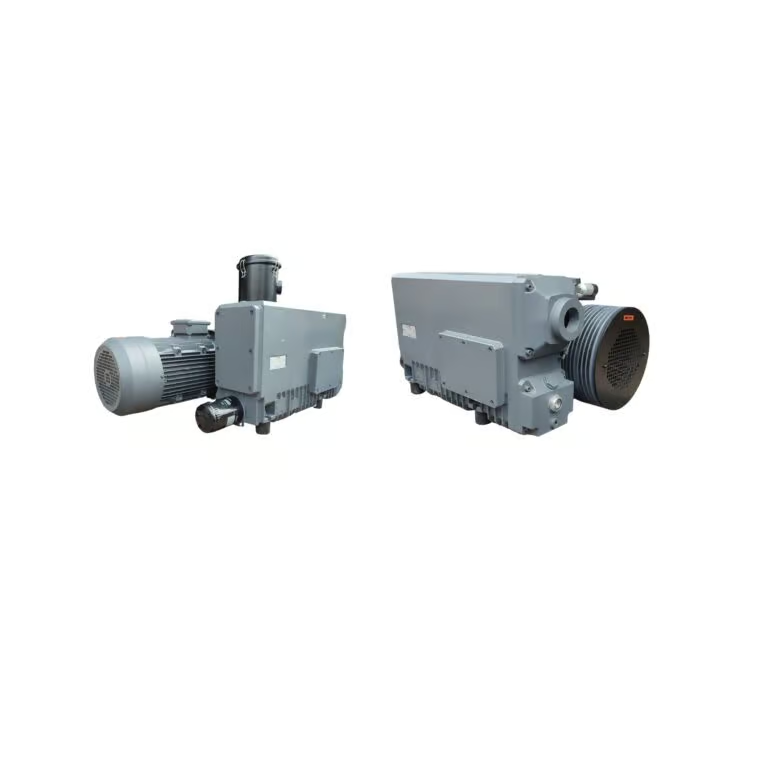
We service the full range of vacuum pump types and brands, including rotary vane, liquid ring, dry vane, dry claw, rotary piston, diaphragm vacuum, and scroll vacuum pumps, across brands such as Busch, Nash, Gardner Denver, Sihi, Becker, Elmo Rietschle, Agilent, Travaini, Edwards, Stokes, Atlas Copco, Flowserve, Kinney, Welch, Graham, and Bell. On the diaphragm pump side, we work extensively with Wilden, Aro, Graco, Sandpiper, and Versa-Matic units, along with related positive displacement pump types including rotary lobe, progressive cavity, gear, plunger piston, and screw pumps.
Across both categories, the same principles apply on every job: a full inspection before any repair decision, OEM-spec parts where performance and reliability depend on it, quality aftermarket options where they make sense, fast turnaround backed by common rebuild kits kept on hand, and practical recommendations aimed at preventing the same failure from coming back.
If your facility relies on vacuum or diaphragm pumps and you are seeing reduced performance, inconsistent operation, or repeat failures, request a quote or contact our team to get a full inspection and clear recommendation.
**All brand names and trademarks mentioned are the property of their respective owners. Industrial Pump Repair Canada is an independent repair provider and is not affiliated with, authorized, or endorsed by these manufacturers. Disclaimer