Centrifugal Pump failure at a Food & Beverage processing plant
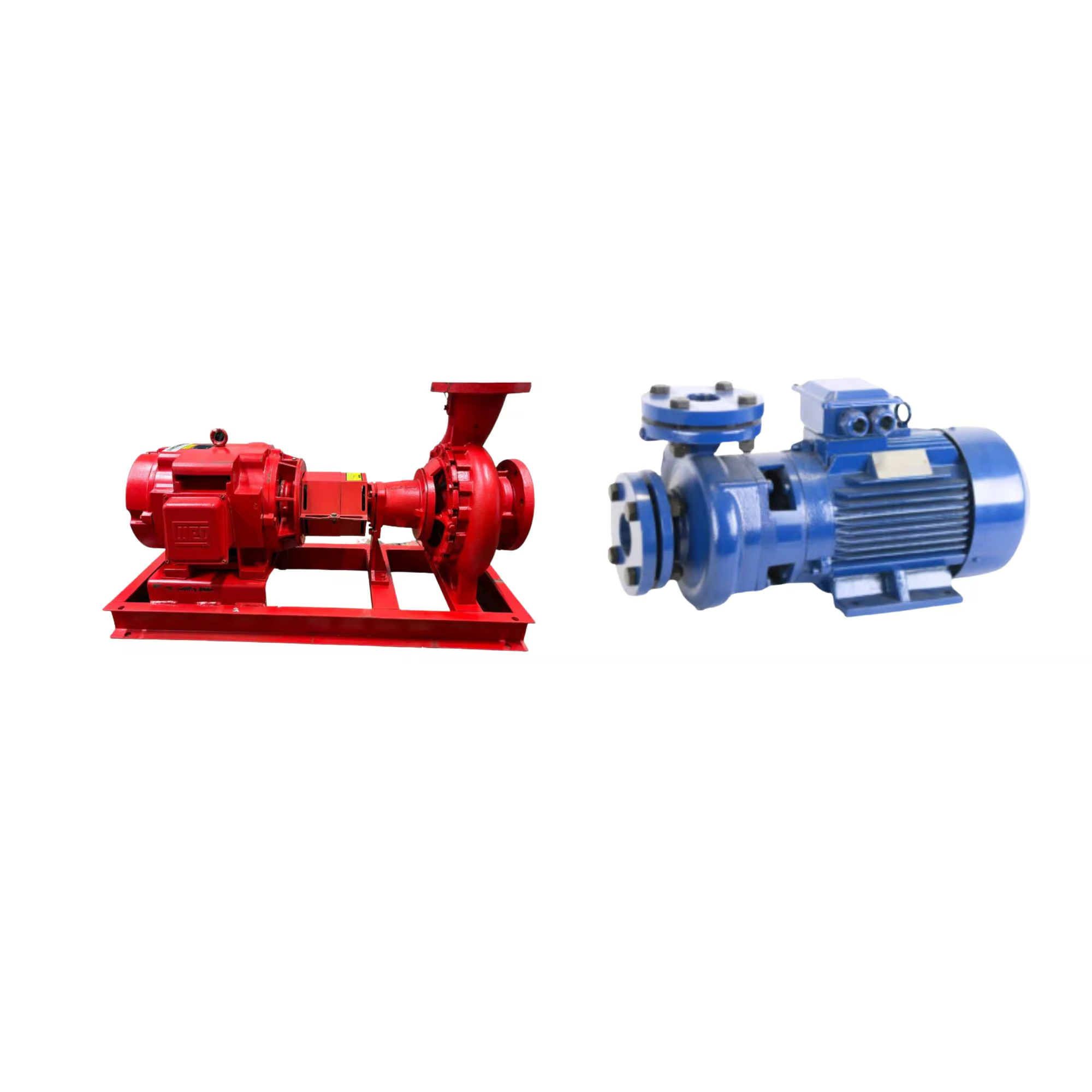
Industry: Food & Beverage / Dairy Pump Type: End Suction ANSI Centrifugal Pump Services Performed: Full teardown inspection, impeller replacement, bearing and mechanical seal replacement, precision balancing
The Situation: Production line on the edge of shutdown
A dairy processing facility in southern Ontario relies on a single centrifugal transfer pump to move product between two stages of its line. Over the course of a few weeks, plant operators began noticing a gradual drop-in flow rate, along with an audible vibration that got worse by the day. By the time maintenance flagged it for inspection, the pump was running noticeably hot, and output had dropped enough that the line was falling behind its daily production targets.
This is a common pattern in food and beverage operations: a pump issue rarely announces itself with a dramatic failure. Instead, it shows up as a slow erosion of throughput, a few extra hours of overtime to hit production numbers, and a growing sense among the maintenance team that “something’s not right.” In this case, the plant estimated it was losing several hours of full-capacity production per week, and overtime labor costs to compensate for the shortfall were adding up. There was also a real risk hanging over the situation: if the pump failed completely, the line would stop entirely, and with only one transfer pump in service, there was no backup to fall back on.
Identifying the Problem
The pump was pulled from service and brought in for a complete disassembly and as-found inspection — the same process we follow on every unit that comes through our shop, regardless of size or industry. Rather than guessing at a fix or simply swapping the most obviously worn part, our technicians worked through the entire assembly systematically: impeller, wear rings, shaft, bearings, seal, and housing.
The inspection turned up three separate issues that, together, explained the symptoms the plant had been seeing:
- Worn impeller vanes. Cavitation and product abrasion over time had eroded the vane edges, reduced the pump’s hydraulic efficiency and explaining the drop in flow rate.
- Bearing wear from misalignment. The bearings showed an uneven wear pattern consistent with the pump having been running slightly out of alignment for some time — likely the source of the vibration and heat.
- Mechanical seal problem. The seal faces were worn beyond tolerance, almost certainly due to a combination of the vibration and the standard wear-and-tear of constant exposure to product and wash-down cycles.
This is a good example of why a full inspection matters more than a quick patch. If only the seal had been replaced — the most visible failure point — the underlying misalignment and impeller wear would have continued to degrade the new seal within weeks, and the plant would have been back in the same position before long.
A detailed as-found inspection report was put together documenting each issue, along with photos and a written quote. We walked the plant maintenance manager through the findings before any repair work began, so there were no surprises on cost or scope.
Solution
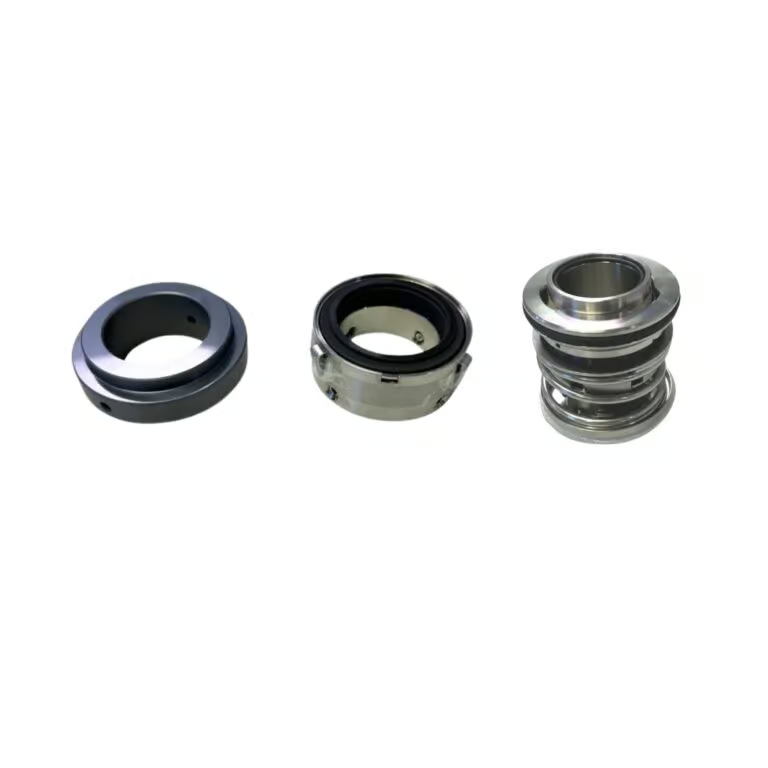
With the scope approved, the pump was reconditioned back to OEM specification. The impeller was replaced with an OEM-spec replacement to restore full hydraulic performance — for centrifugal pumps in continuous-duty applications like this one, we generally recommend OEM parts on flow-critical components like impellers, since tolerances and material composition directly affect efficiency and cavitation resistance. The bearings were replaced, and the shaft was precision-aligned to eliminate the root cause of the vibration, not just the symptom. The mechanical seal was replaced with a sanitary-grade design suited to dairy and food-grade applications, with seal faces selected for better resistance to the specific wash-down chemicals used at the plant.
Before the pump was returned, it was precision balanced and run-tested to confirm vibration levels were within acceptable limits and that flow and pressure matched OEM performance curves.
Getting the line back up
Because the plant only had one transfer pump on this part of the line, turnaround time was the top priority alongside getting the repair right. We prioritized the inspection and quote so the plant had clear numbers and a go/no-go decision within a day of us receiving the unit, and once approved, the reconditioning was completed and the pump was back on site well within the timeframe needed to avoid a full production stoppage. Fast turnaround on a job like this comes down to having the right OEM parts on hand or readily available and not having to wait on a full custom remanufacture for components that have known, available replacements.
Preventing actions
A repair is only half the job — the more valuable part of the visit, long term, is making sure the same failure doesn’t show up again in six months. We flagged the original misalignment as the likely root cause of the bearing and seal wear, and recommended the plant add an alignment check to its quarterly preventive maintenance routine, rather than waiting for symptoms to appear. We also discussed an upgraded seal face material, suited specifically to the wash-down chemicals used at this facility, at no additional engineering cost — this kind of recommendation is something we build into every inspection where we see a part wearing faster than it should for its application.
The Result
The plant avoided a full unplanned shutdown, restored the pump to full rated capacity, and addressed the root cause rather than just the symptoms. Just as importantly, they walked away with a maintenance plan that should meaningfully reduce the odds of a repeat failure — and a clear sense of what the early warning signs look like next time, well before a small inefficiency turns into lost production hours.