Underperforming vacuum system at a Pulp & Paper Mill
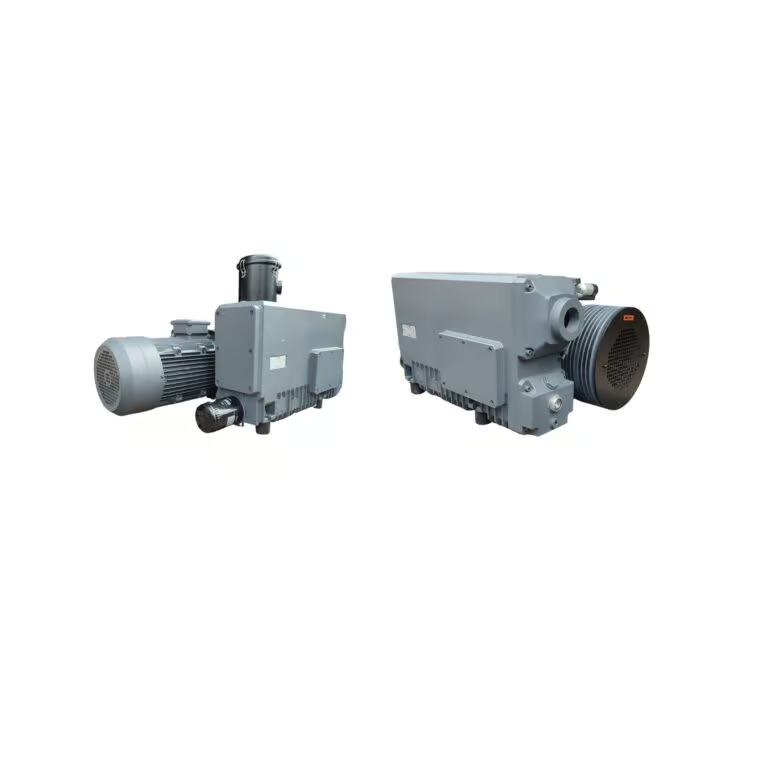
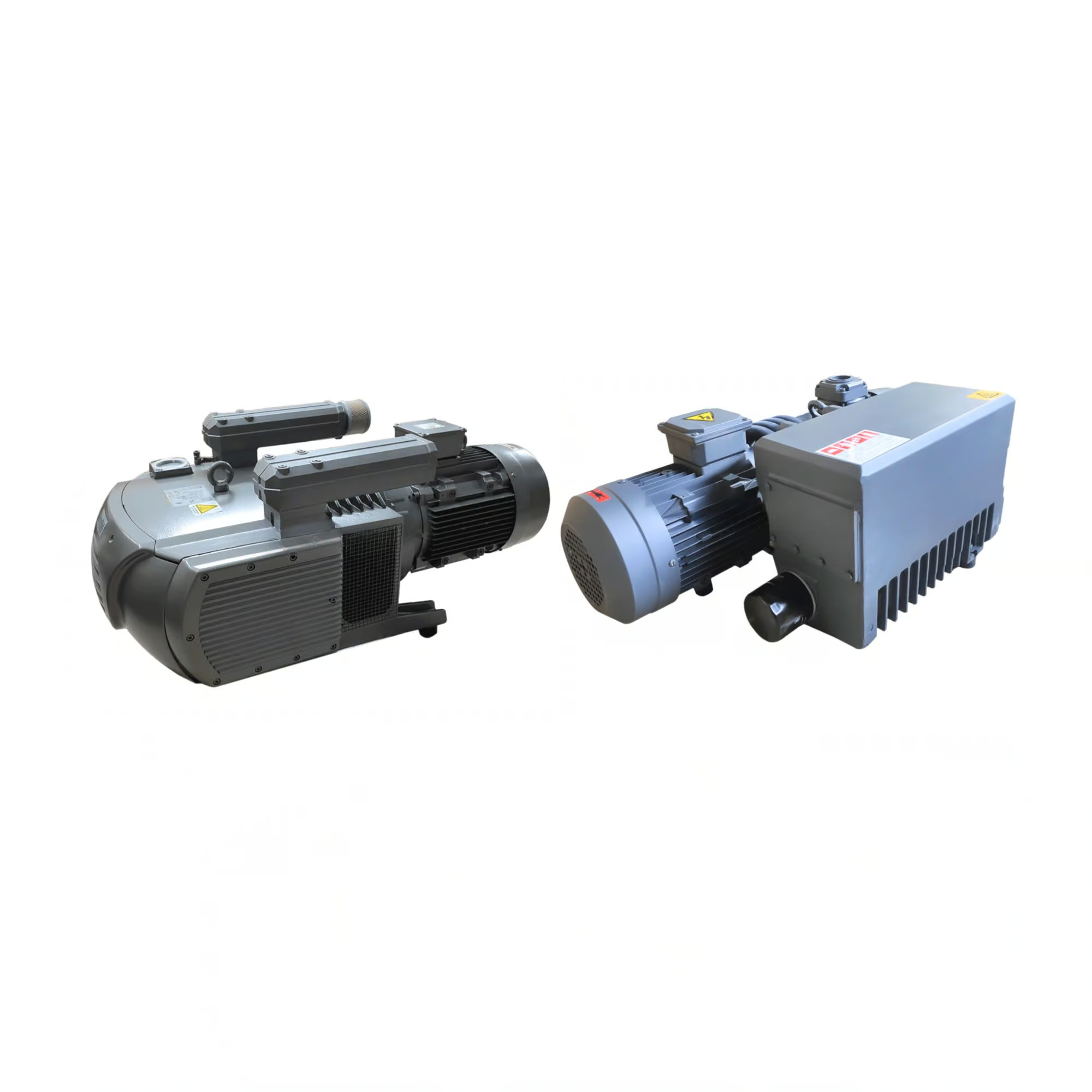
Industry: Pulp & Paper Pump Type: Vacuum Pump Services Performed: Full disassembly and inspection, rotating assembly reconditioning, bearing and seal replacement, performance testing
The Situation: Slower Production and Inconsistent Quality
At a pulp and paper mill, the vacuum system plays a critical role in the dewatering stage of the paper-making process — and when it’s not performing at full capacity, the effects ripple through the rest of the line. In this case, mill operators noticed the paper machine had to be run at reduced speed to maintain sheet quality, and even then, the finished product was showing inconsistent moisture content and occasional sheet breaks.
For a continuous-process operation like a paper mill, running at reduced speed isn’t a minor inconvenience — it’s a direct hit to daily output, and the inconsistent sheet quality was generating additional waste and rework. Over the weeks the issue persisted before being addressed, the mill was losing meaningful production time and dealing with higher scrap rates, both of which carry a real cost that adds quickly in a high-volume operation.
Identifying the problem
The vacuum pump was pulled from service and sent in for a complete teardown and inspection. The investigation identified several compounding issues:
- Internal wear on rotating components, reducing the pump’s ability to pull and hold the vacuum levels required for effective dewatering.
- Bearing wear, contributing to both increased noise during operation and a measurable drop in mechanical efficiency.
- Seal wear, allowing minor air leakage into the system that, combined with the rotating component wear, compounded the overall loss of vacuum performance.
Individually, any one of these issues might have been manageable, but together they had pushed the system’s performance below the threshold needed for consistent sheet quality, forcing the mill to compensate by slowing the line.
A full as-found report was provided to the mill maintenance team, outlining each finding along with photos and a recommended scope of repair, so the decision to proceed was based on clear information rather than guesswork.
Solution
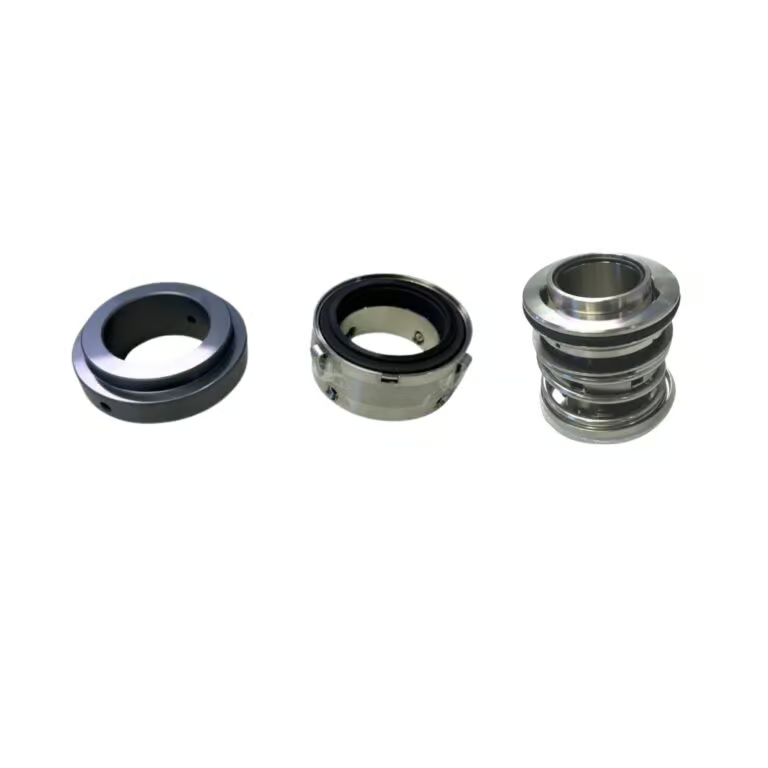
The pump rotating assembly was reconditioned to OEM tolerances to restore full vacuum efficiency, with bearings and seals replaced throughout. Where OEM parts were specified by the original manufacturer for critical rotating and sealing components, we used OEM-spec replacements to ensure the restored performance matched the original equipment curves as closely as possible — important in an application like vacuum dewatering, where even small efficiency losses translate directly into production speed and quality issues. The unit was then run-tested prior to shipping to confirm vacuum levels were restored to specification before it went back into service.
Turnaround and getting back to full speed
Mills running continuous processes generally can’t afford extended downtime, so the inspection and quote were turned around quickly, and the reconditioning work was scheduled to get the unit back on site with minimal disruption to the production schedule. Having ready access to OEM-spec bearings, seals, and rotating components for common vacuum pump platforms is what allows us to keep these turnaround times tight, rather than waiting on long-lead custom parts.
Preventive actions
Since this failure developed gradually rather than suddenly, the most valuable recommendation here was around monitoring. We suggested the mill incorporate a regular vacuum performance check into its maintenance schedule, so that a gradual decline in vacuum levels — like the one that led to this issue — gets caught and addressed before it affects sheet quality or forces a speed reduction. We also flagged the specific bearing wear pattern we found as something to watch for on the mill’s other vacuum units operating under similar duty cycles, since it can indicate a broader lubrication interval issue rather than something isolated to a single pump.
The Result
The mill regained full vacuum performance on the dewatering line, allowing the paper machine to return to its standard operating speed with consistent sheet quality. Reconditioning the existing unit also proved considerably more cost-effective than a full pump replacement, restoring performance comparable to new equipment at a fraction of the cost and lead time.
What these projects have in common?
Across very different industries and pump types, a few practices show up consistently in how we approach every repair:
A full inspection before any repair decision. Every pump that comes through our shop is fully disassembled and inspected before we issue a quote. This matters because of the visible failure — a leaking seal, a noisy bearing — is often a symptom of a different underlying cause. Treating the symptoms without finding the cause is the most common reason for repeat failures.
OEM parts where it counts, aftermarkets where it makes sense. For components that directly affect hydraulic performance, sealing integrity, or safety — impellers, seal faces, critical bearings — we generally recommend OEM-spec parts, since tolerances and material composition have a real impact on reliability. For non-critical hardware, quality aftermarket components can offer a faster turnaround without compromising the repair, and we’ll always discuss both options with the customer rather than defaulting to one or the other.
No cost upgrade recommendations. Where an inspection reveals that a part is wearing faster than expected for its application — wrong seal material, undersized bearing, misalignment — we flag it and recommend an upgrade as part of the standard process, at no additional engineering cost. This is often what separates a pump that needs repeated attention from one that runs reliably for years.
Fast, clear turnaround. We know that every day a pump is out of service is a day of lost production, overtime costs, or operational risk. We prioritize getting inspection reports and quotes back quickly so customers can make an informed decision fast, and we keep common OEM and aftermarket parts on hand for the platforms we see most often, so reconditioning doesn’t get held up waiting on parts.
Prevention, not just repair. A repair that doesn’t address why the failure happened in the first place is only a temporary fix. On every job, we look for the root cause and provide practical recommendations — alignment checks, monitoring intervals, material upgrades, preventive maintenance schedules — aimed at making sure the same issue doesn’t come back.
If your facility is dealing with a pump, booster, or blower issue — whether it’s a sudden failure or a gradual performance decline — request a quote or contact our team to discuss inspection and repair options.