Submersible Pump Repair: What Wastewater, Municipal & Construction Operators Need to Know
Submersible pumps operate in one of the toughest environments any piece of equipment can face: fully submerged, often in wastewater, stormwater, slurry, or groundwater, and frequently out of sight until something goes wrong. For municipal operators, contractors, and industrial facilities across Southern Ontario, that “out of sight” reality makes a proactive repair strategy essential — because by the time a submersible pump fails visibly, it’s usually already caused a bigger problem upstream (or downstream).
Why Submersible Pumps Fail Differently Than Other Pumps
Because submersible units are sealed and immersed, most failures fall into a few recurring categories:
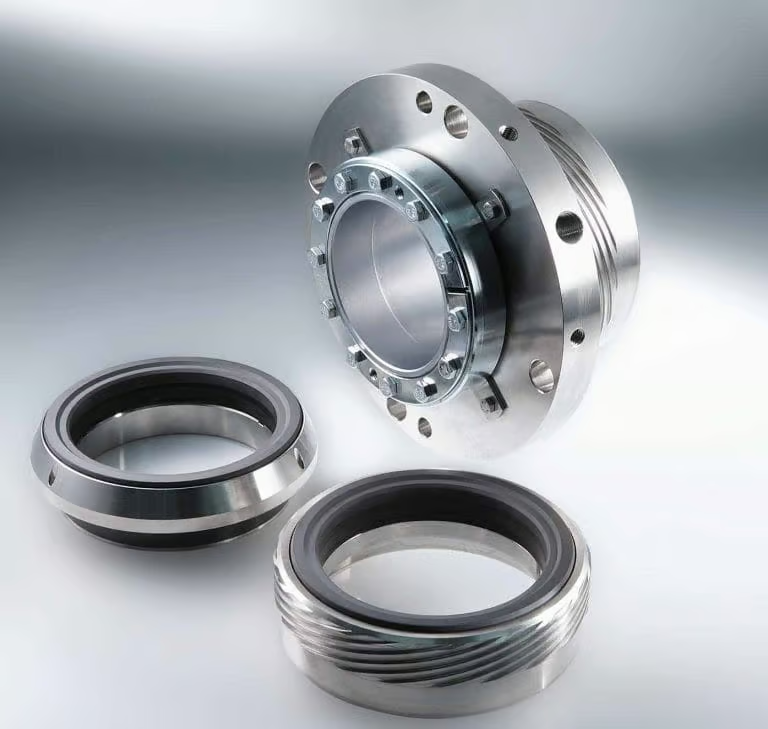
- Seal and cable failure. The lower seal is the pump’s only barrier between the motor and the fluid it’s pumping. Once that seal degrades — from abrasive solids, chemical exposure, or simple age — water intrusion into the motor housing is usually not far behind.
- Impeller and volute wear from solids. Wastewater and stormwater applications carry grit, rag material, and debris that wear impellers and clog volutes far faster than clean-water applications.
- Bearing wear from continuous duty. Many submersible installations run near-continuously, which shortens bearing life compared to intermittent-duty applications.
- Cable damage. Power and control cables take physical abuse during installation, lifting, and repositioning — a nicked or compromised cable jacket is a common, preventable cause of failure.
The Cost of Reactive-Only Maintenance
For a manufacturing plant, a failed pump usually means a production stoppage everyone notices immediately. For a lift station, a stormwater pump, or a construction dewatering pump, the failure mode is different — and arguably riskier: it can run undetected until there’s a backup, an overflow, or a flooded site. For municipal and industrial wastewater operators in particular, that has regulatory and environmental implications, not just operational ones.
A scheduled inspection and repair cadence — rather than waiting for a pump to trip an alarm or stop pumping altogether — catches seal wear, cable damage, and impeller erosion while they’re still a bench repair instead of a full pump replacement.
What a Proper Submersible Pump Repair Involves
A thorough submersible pump repair typically includes:
- Full teardown and inspection of the seal chamber, impeller, wear rings, and bearings
- Insulation resistance (megger) testing on the motor and cable to catch water intrusion before it causes a burnout
- Seal replacement using components rated for the specific application — abrasion-resistant seals for solids-laden fluid, chemical-resistant options for industrial process water
- Cable inspection and, where needed, replacement or splicing to manufacturer specification
- Performance testing before the unit goes back into service, confirming flow and amp draw are within spec
Serving Southern Ontario’s Municipal, Industrial & Construction Sectors
From lift stations and treatment facilities to construction dewatering and industrial sump applications, submersible pump reliability is directly tied to uptime, compliance, and site safety across Hamilton, Halton, Niagara, Peel, the GTA, and out to London and Kitchener.
Industrial Pump Repair Canada is ISO 9001 certified and repairs and rebuilds submersible pumps across all major brands. If a submersible unit at your facility or site is due for inspection — or already showing signs of trouble — request a quote or call 1-844-291-6609.