Wine Pump Repair Service for Niagara & Southern Ontario Wineries
Southern Ontario is home to one of the largest wine regions in the country, and every winery in Niagara, Prince Edward County-adjacent operations, and across the Golden Horseshoe depends on one piece of equipment more than almost any other during crush, racking, and bottling season: the wine pump. When it goes down mid-harvest, there’s no waiting three weeks for a service slot.
Why Wine Pumps Need Specialized Repair Knowledge
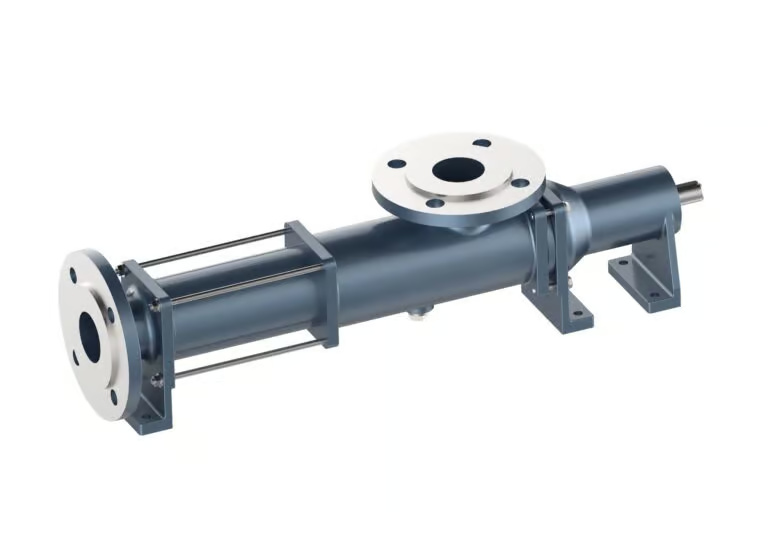
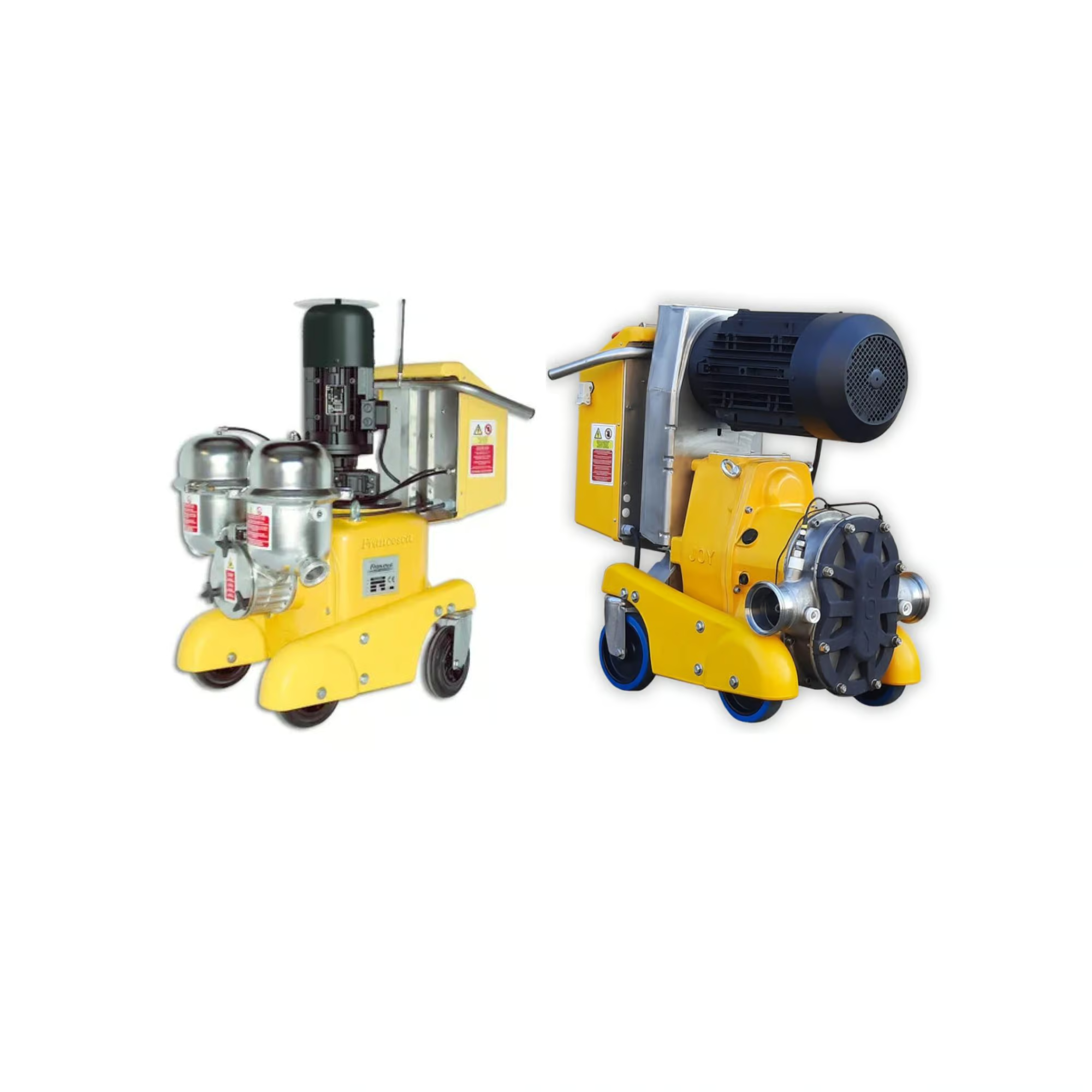
Wine transfer pumps — whether coaxial rubber semi-lobe designs, flexible-vane pumps, or trapezoidal lobe pumps — are built differently from a standard industrial process pump, and they need to be repaired differently too. A few things set them apart:
- Gentle, low-shear handling. Wine and must are fragile products. These pumps run at very low rotor speeds (often in the range of single digits to a few hundred RPM) specifically to avoid aerating or damaging the product, which means internal clearances and rotor geometry have to be restored precisely — not just “close enough.”
- Sanitary construction. Wetted parts are typically AISI 304 or 316 stainless steel, food- and beverage-grade, and need to be washable and sterilizable. Any repair has to preserve that sanitary standard, not compromise it with the wrong gasket, seal, or fastener material.
- Self-priming, dry-lift performance. Many wine pumps are rated for significant dry suction lift. Worn rotors, lobes, or seals reduce that lift capability long before the pump fails outright — which often shows up first as slower transfers and more difficulty priming, not as a dramatic breakdown.
- Seasonal, high-intensity use. Wineries don’t run these pumps evenly through the year. Crush season puts months of wear into a pump in a matter of weeks, which means inspection and maintenance timing needs to follow the harvest calendar, not a generic annual schedule.
Common Wine Pump Issues We See
- Worn or torn rotor lobes and rubber elements, reducing flow and self-priming ability
- Seal wear leading to product leakage or air intrusion (a serious issue for isobaric or pressurized transfers)
- Bearing wear from extended crush-season duty cycles
- Damaged or pitted stainless internals from cleaning chemicals or CIP (clean-in-place) cycles
- Flow control and variable-speed drive issues affecting the gentle handling the pump is chosen for in the first place
What a Proper Wine Pump Service Includes
- Full inspection and teardown of the pumping chamber, rotor/lobe elements, and seals
- Sanitary-grade parts replacement — food- and beverage-safe seals, gaskets, and elastomers matched to the original specification
- Dry-lift and flow performance testing before the pump returns to service, confirming it still meets its rated suction lift and flow curve
- Stainless steel inspection for pitting or surface damage from cleaning chemicals, with polishing or replacement as needed
- Pre-harvest service scheduling, so equipment is inspected and ready before crush — not during it
Timing Matters More Than Anything Else
The single biggest factor in wine pump reliability isn’t the pump itself — it’s when service happens. A pump serviced in the quiet months (late winter through early summer) is a pump that’s ready when crush hits. A pump that starts showing problems in September is a pump that’s already competing with every other winery in the region for repair capacity.
Serving Niagara & Southern Ontario’s Wine Industry
Industrial Pump Repair Canada is ISO 9001 certified and services pumps for food, beverage, and processing operations across Hamilton, Niagara, Halton, Peel, and the rest of Southern Ontario. If your winery is running wine transfer pumps and it’s time for a pre-season inspection, or a pump is already underperforming, request a quote or call 1-844-291-6609 — we’ll get you ready for the next crush, not scrambling during it.