Maximizing Uptime: The Ultimate Guide to Vacuum Pump Maintenance for Southern Ontario Manufacturers
In the competitive landscape of Southern Ontario’s manufacturing sector, from the bustling cabinet shops of Hamilton to the high-volume food packaging plants in Niagara, there is one silent partner that keeps production moving: the vacuum pump.
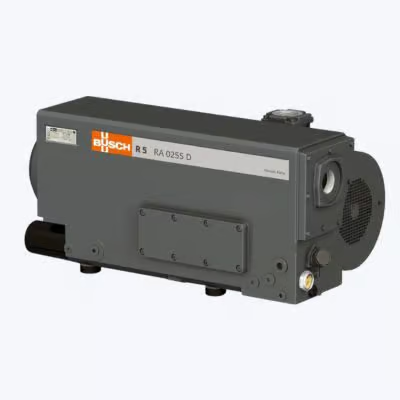
Whether it is a Busch R5 holding down a mahogany sheet on a CNC router or a Becker vane pump ensuring the perfect seal on a tray of fresh produce, vacuum technology is the heartbeat of the shop floor. However, because these pumps often sit in a corner or under a machine, they are frequently neglected until the moment they fail.
When a pump goes down, production stops. In this guide, we will explore how businesses in Southern Ontario can protect their equipment, maintain maximum suction, and understand when it’s time for a professional rebuild.
The High Cost of “Losing Suction”
For a kitchen cabinet manufacturer or a custom millwork shop, the vacuum pump is responsible for “hold-down force.” If that force weakens, the CNC router cannot cut with precision. Parts shift, wood is scrapped, and expensive bits can break.
In food packaging, the stakes are equally high. A drop in vacuum pressure leads to poor seals, which can result in compromised product shelf life and expensive recalls.
At Industrial Pump Repair Canada, we’ve seen that most “emergency” failures could have been prevented with a better understanding of how these mechanical workhorses operate.
Understanding Your Pump: Rotary Vane vs. Dry Claw
Different industries in Ontario require different vacuum technologies. Knowing what you have is the first step in maintaining it.
1. Rotary Vane Vacuum Pumps (Busch, Becker, Rietschle)
Commonly found in woodworking and general manufacturing, these pumps use oil to seal the vanes and lubricate the system. They are incredibly reliable but are sensitive to heat and contamination. In a dusty environment like a cabinet shop, the oil can quickly become a “sludge” if filters aren’t changed.
2. Dry Claw Pumps (Busch Mink)
These are becoming the standard for CNC hold-down tables because they don’t require oil in the pumping chamber. This makes them lower maintenance, but they run very hot. If the cooling fins aren’t kept clear of sawdust and debris, the internal clearances can tighten until the pump seizes.
3. Liquid Ring Pumps (Nash, Sihi, Travaini)
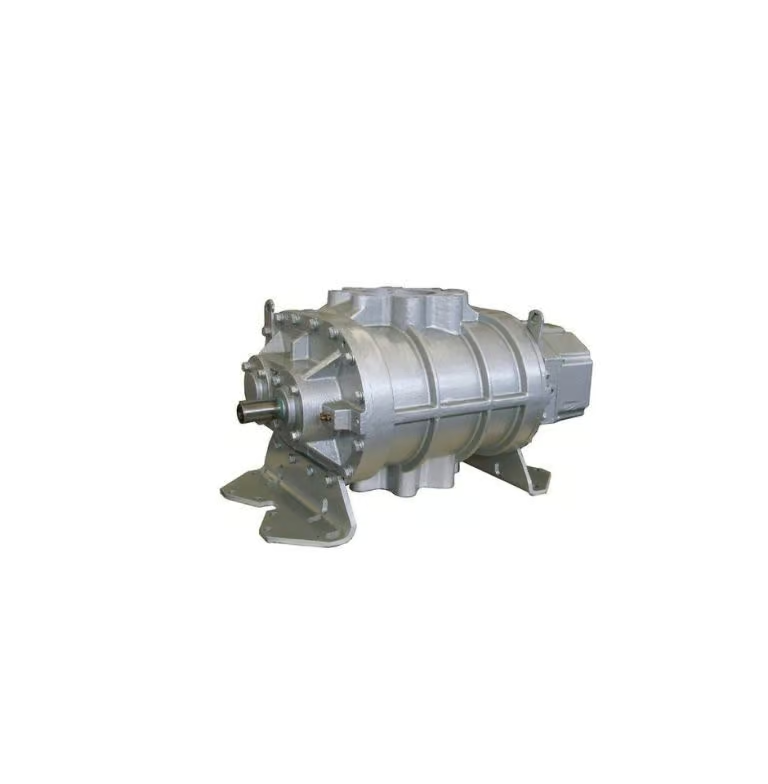
Frequently used in heavy industrial applications and chemical processing, these use a liquid (usually water) as the seal. They are rugged but require a constant, clean supply of seal fluid to maintain performance.
The Top 3 Enemies of Your Vacuum System
Regardless of the brand—be it Edwards, Agilent, or Atlas Copco—three main factors lead to most pump failures in Ontario facilities.
1. Contamination (The “Dust” Factor)
In Southern Ontario’s massive millwork and CNC plastic sectors, dust is everywhere. If your intake filters are clogged, the pump has to work twice as hard to pull a vacuum. This leads to overheating. Furthermore, if fine dust bypasses the filter, it enters the internal chambers, scoring the vanes or the cylinder walls.
2. Heat
Vacuum pumps generate a significant amount of heat naturally. In the humid summers of the Golden Horseshoe, internal temperatures can skyrocket. If a pump is tucked away in a small enclosure without proper ventilation, the oil will oxidize and lose its lubricating properties, leading to a total mechanical failure.
3. Neglected Oil Changes
For oil-sealed pumps like the Busch R5 series, the oil is the “blood” of the machine. It doesn’t just lubricate; it seals the gap between the vane and the wall. As oil breaks down, your “ultimate vacuum” depth will drop. You might notice your CNC table isn’t holding parts as tightly as it used to—this is often the first sign that your oil is spent.
Industry-Specific Advice
For Cabinet Makers and Woodworkers
The priority here is air filtration. Because wood dust is so fine, standard filters can clog in a matter of weeks. We recommend a dual-stage filtration system for high-volume shops. If you notice your pump “smoking” (which is actually oil mist), it usually means your exhaust filters are saturated and need immediate replacement.
For Food Processing and Packaging
In food-grade environments, moisture is the enemy. When you pull a vacuum on moist products, water vapor enters the pump. If the pump doesn’t run hot enough to “boil off” that moisture, it settles in the oil, causing corrosion. Running the pump with the gas ballast open for 20 minutes before and after a shift can significantly extend the time between rebuilds.
For Printing and Paper Handling
Printing presses often use Becker dry vane pumps. These vanes are made of carbon and slowly wear down like a pencil lead. If the vanes become too short, they can shatter, causing catastrophic damage to the pump core. Regular measurement of vane length is the only way to prevent this.
When to Stop Repairing and Start Rebuilding?
Many maintenance managers try to “patch” a pump to keep the line moving. While this works for a day or two, it often leads to a more expensive repair later.
You should consider a professional shop rebuild if:
-
The Pump is Running Hot: If the surface temperature exceeds the manufacturer’s spec, internal friction is likely too high.
-
Loss of Ultimate Vacuum: If the pump can no longer hit its rated microns, the internal seals (vanes or rings) are likely worn beyond their tolerances.
-
Increased Noise/Vibration: This is a classic sign of bearing failure. If a bearing goes, it can take the motor and the pump head with it.
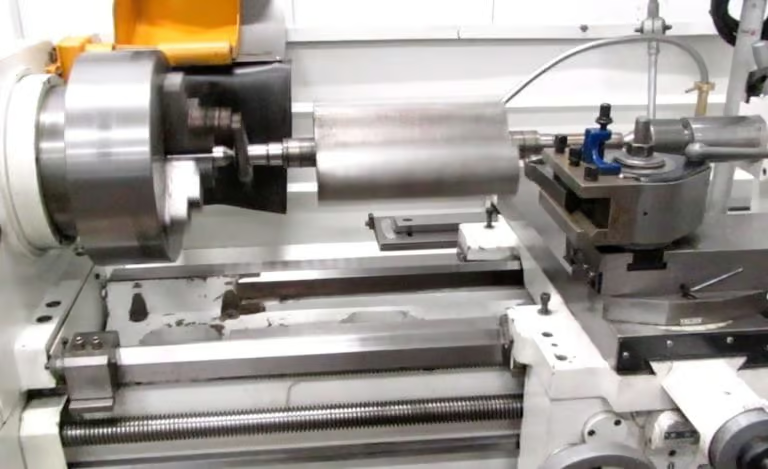
At Industrial Pump Repair Canada, our rebuild process involves a complete teardown. We don’t just “fix the leak.” We strip the unit, chemically clean all components, check every tolerance against OEM specs, and replace all wear parts. We then test the pump under load to ensure it performs like a brand-new machine before it leaves our Hamilton shop.
Why Local Expertise Matters in Southern Ontario
While there are many general mechanical shops, vacuum technology is a specialty. A pump that isn’t timed correctly or uses the wrong vane material will fail within months.
Being based in Hamilton, we understand the local industrial climate. We know the specific needs of the manufacturers in Brampton, Mississauga, and the Niagara region. We pride ourselves on punctuality and a total understanding of these systems—whether it’s a vintage Nash liquid ring pump or a modern Agilent scroll pump.
Conclusion: Uptime is a Choice
Your vacuum pump shouldn’t be a source of stress. With a basic maintenance schedule—focused on clean filters, fresh oil, and adequate ventilation—you can avoid 90% of unplanned downtime.
However, when the time comes that your pump is no longer performing at its peak, the smartest move for your bottom line is a professional rebuild. Investing in a high-quality overhaul today prevents a total production shutdown tomorrow.
Do you have a pump that’s losing suction or making noise? Don’t wait for it to fail. Contact Industrial Pump Repair Canada today. We provide expert repair, rebuilds, and replacements for all major brands across Southern Ontario.
Visit us at industrialpumprepair.ca or call us to discuss your next service.